
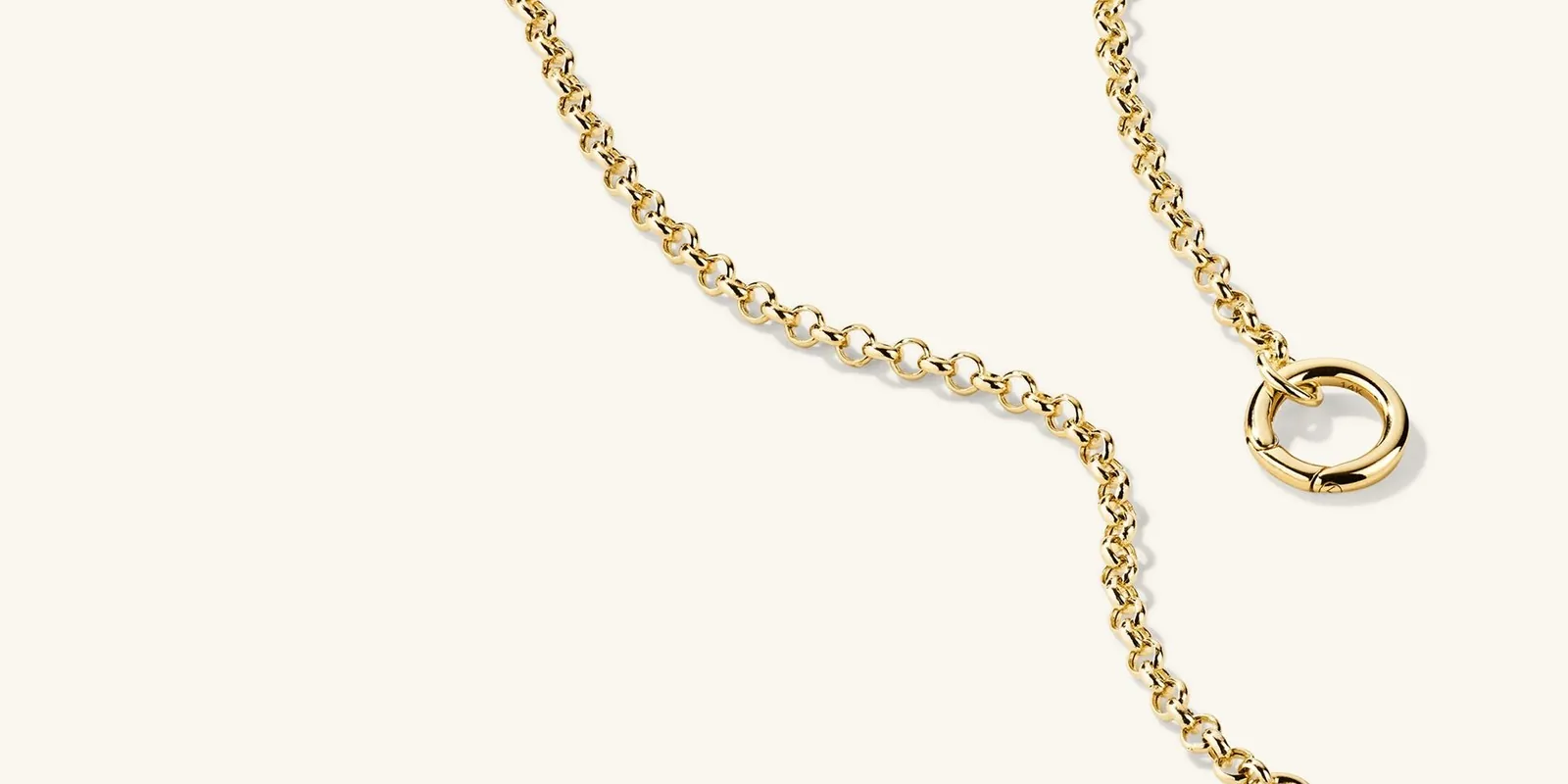
To tell a good necklace from junk, read what the chain is made of all the way through, not just the color on top. Solid gold, sterling silver or stainless steel lasts. Gold plated brass is the kind that wears through, and then it could tarnish or turn skin green. Then check three more things: the word solid and not hollow, a chain at least about 1mm wide, and a lobster clasp held on by closed rings. A good example that passes is the GLDN Solid Gold Fine Cable Chain, 10k solid gold, $228 at GLDN.
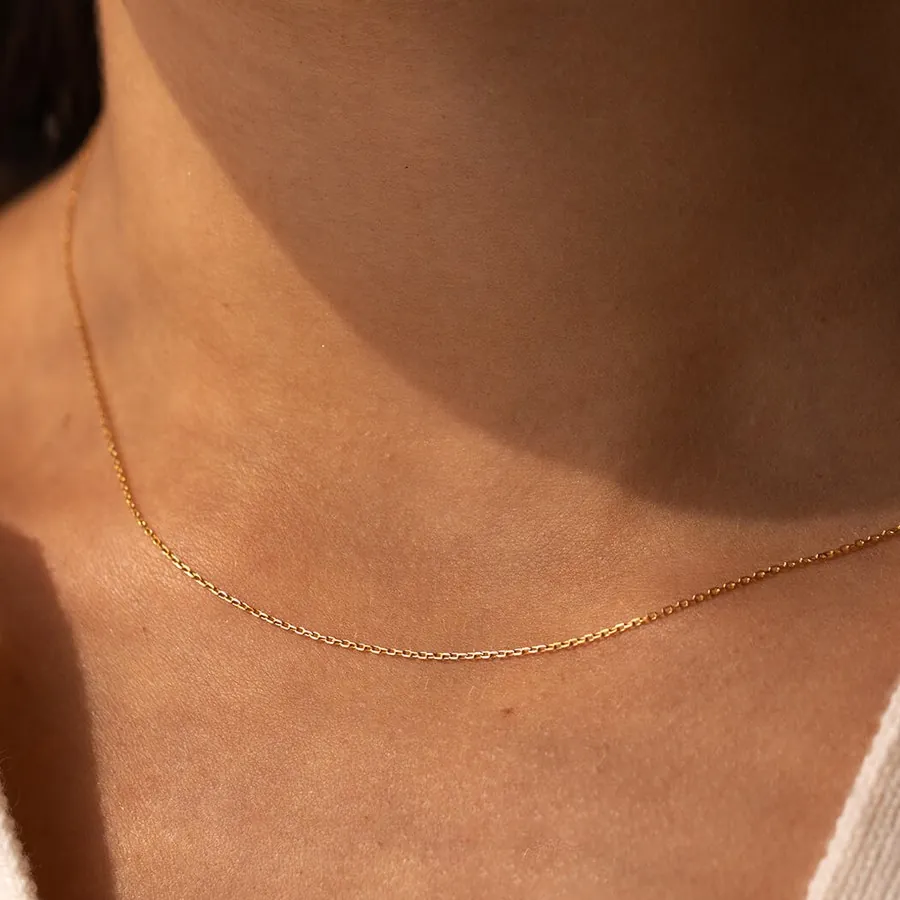
GLDN Solid Gold Fine Cable Chain, 10k
The listing names the karat, says solid gold, and gives the width (1.0mm) and the link style (round cable). That's everything a good listing should tell you.
See it at GLDN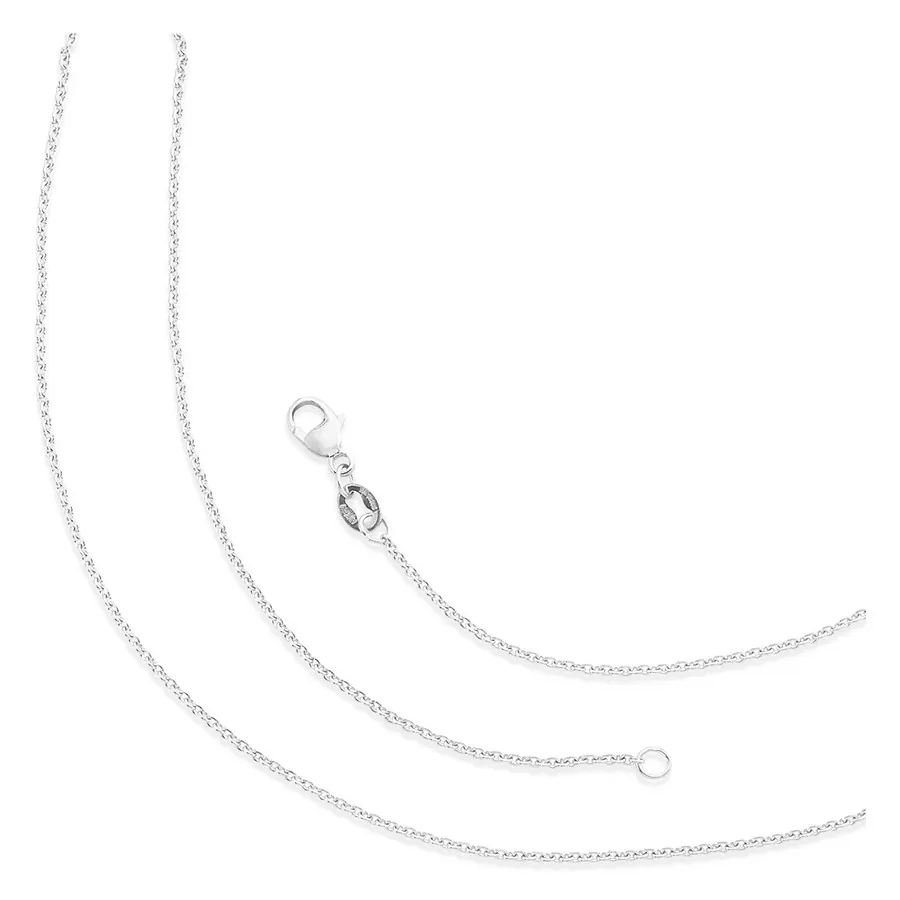
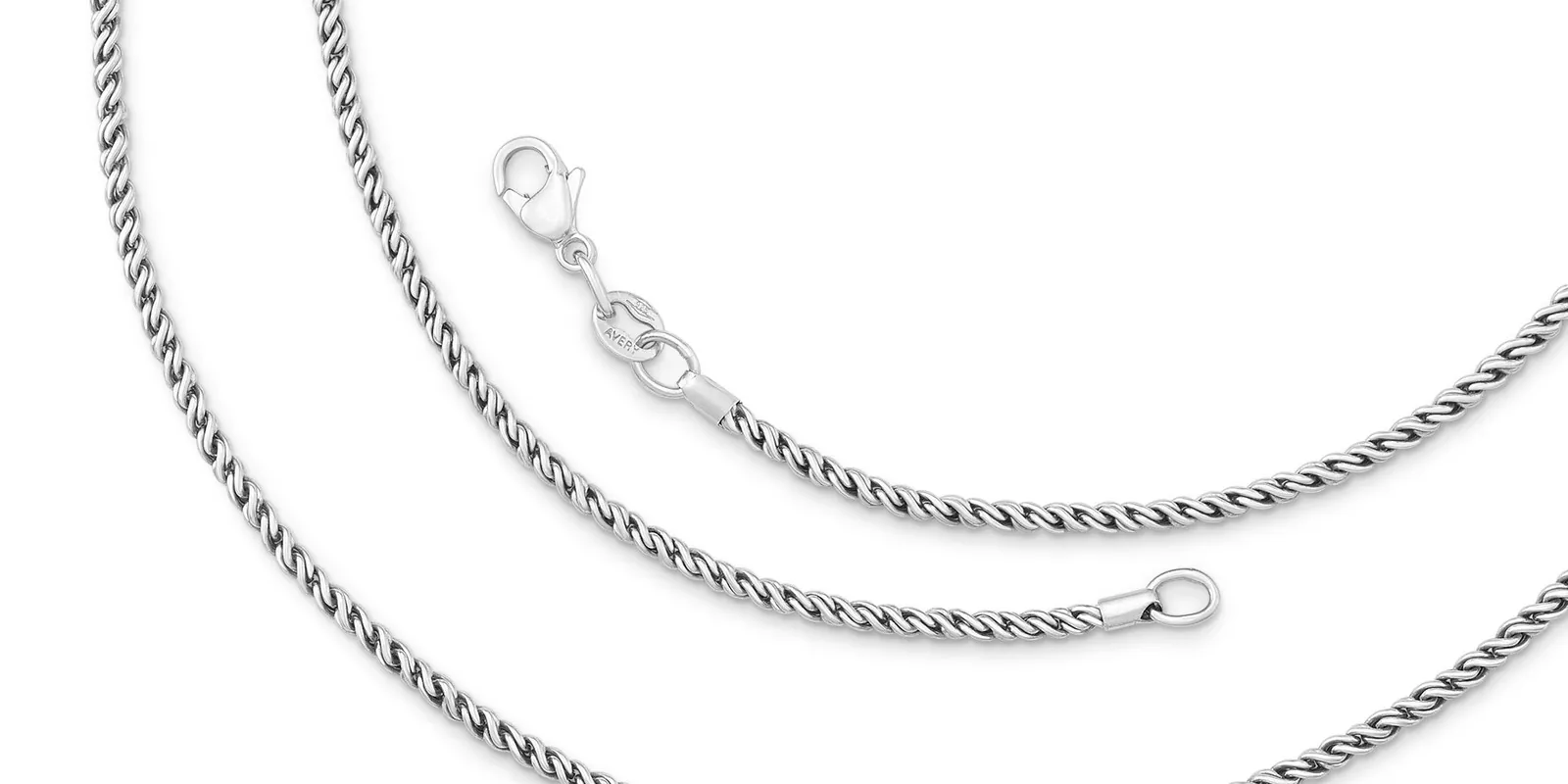
James Avery Fine Cable Chain
Solid sterling silver, about 1.3mm, with a lobster clasp. Use it when a solid pendant came on a cheaper chain.
See it at James Avery, 18 inches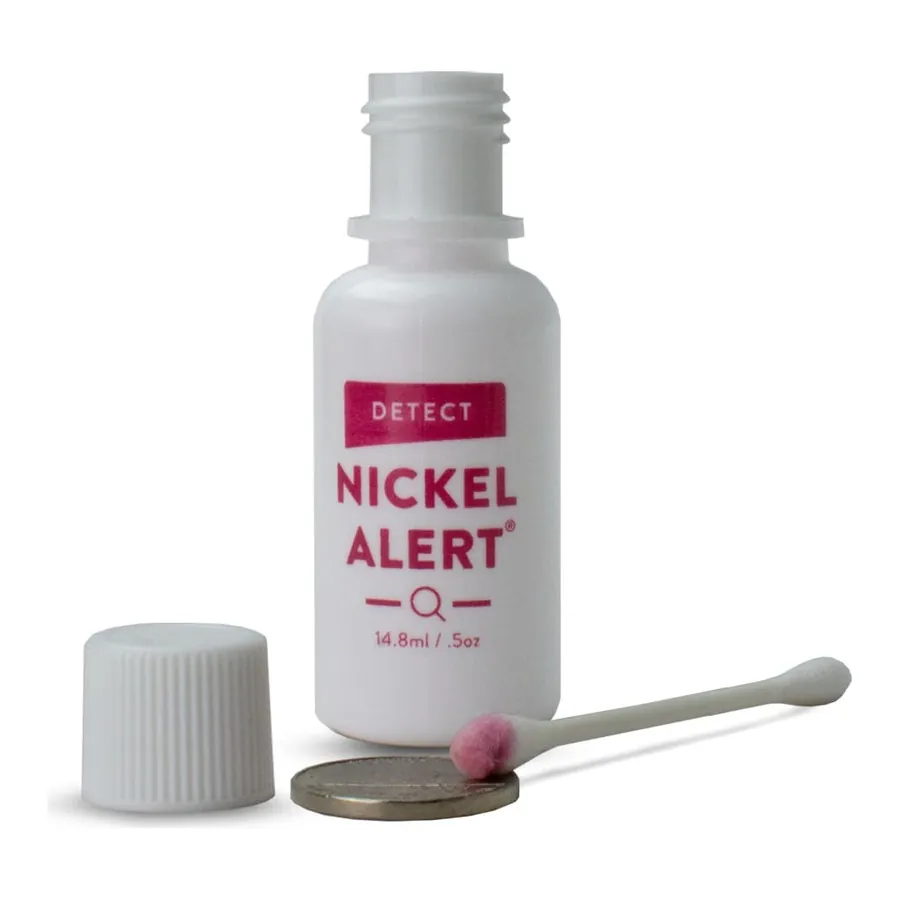
Nickel Alert
A spot test you rub on the clasp and rings. The swab turns pink if the metal gives off nickel.
See it at NoNickelProduct photos come from each maker's own store.
Who this is for
This page is for anyone spending about $15 to $250 on a necklace, whether that's for herself or as a gift, who wants it to last. Maybe a cheap chain already turned her neck green. Or maybe you're looking at a listing that says "18K," "waterproof" and "hypoallergenic" and wondering what you're actually getting.
The same checks apply to every chain on my other necklace pages, from a $13 chain all the way up to solid gold. And for earrings, the part that goes through the ear matters most, so my guide to telling good earrings from junk covers that.
Prices change, so check the linked page before you buy. As an Amazon Associate, Lancelot's List earns from qualifying purchases.
How I picked
The three picks on this page show what passing the checks looks like, and give you a way to check for yourself. I judged them on four things.
- Does the listing name the metal all the way through? Solid gold with a karat, sterling, or a named steel. Not just a color.
- Does it say solid, and give the width? A listing that hides the width or skips the word solid is hiding something.
- Is the clasp strong enough for the chain? A lobster clasp, or a spring clasp on a fine chain.
- Does it help you check a necklace you already own?
What the metal words on a label mean
Here's what each word on a necklace listing means, from the kind that lasts to the kind that wears off first.
| Word on the label | What it means | Will it last? |
|---|---|---|
| Solid 14K or 585 | 14 parts gold out of 24, so 58.3% gold, the same all the way through | Yes. Nothing to wear off |
| Solid 10K or 417 | 41.7% gold all the way through | Yes. Less gold, a paler color |
| 8K or 9K | Allowed in the US if it's marked. 8K is one third gold | Real gold, but mostly other metals |
| 18K or 750 | 75% gold all the way through | Yes, and it costs the most |
| Sterling silver, 925 | At least 92.5% silver | Yes. It darkens, and polishing brings it back |
| 316L stainless steel | Steel with 10% to 14% nickel. The "L" means low carbon, not low nickel | Yes. It could still bother a strong nickel allergy |
| Titanium, ASTM F136 or F67 | Implant-grade or pure titanium | Yes, and no nickel |
| Gold-filled, GF, 1/20 14K | A layer of at least 10K gold bonded on with heat and pressure. It's at least 1/20 of the metal's weight. The core is often brass | Much longer than plating, but the brass is still underneath |
| Rolled gold plate, RGP, 1/40 | The same kind of layer, but it only has to be 1/40 of the weight | Less gold than gold-filled |
| Vermeil | Gold at least 2.5 microns thick over sterling silver | The gold can wear off, and the silver shows |
| Heavy gold electroplate, HGE | Gold at least 2.5 microns thick over any metal | Thicker plating, but still plating |
| Gold plated, GP, GEP | Gold put on by electroplating that only has to be 0.175 microns thick | Wears through first. Then the metal underneath touches skin |
| Gold flashed or gold washed | A very thin layer of gold | Wears off faster than gold plate |
| PVD | A coating put on in a vacuum. The letters don't say what the coating is made of | Makers say it holds color far longer than plating, but it's still a coating |
| "Gold tone," "gold color" | A color, not a metal | Nothing promised at all |
Now something worth noting is that the US rules behind most of this come from the FTC's Jewelry Guides. But keep in mind, those guides don't define "hypoallergenic" or "nickel-free." And the Consumer Product Safety Commission says there are no mandatory federal requirements specifically for jewelry. So ultimately, those two words are just the seller's words.
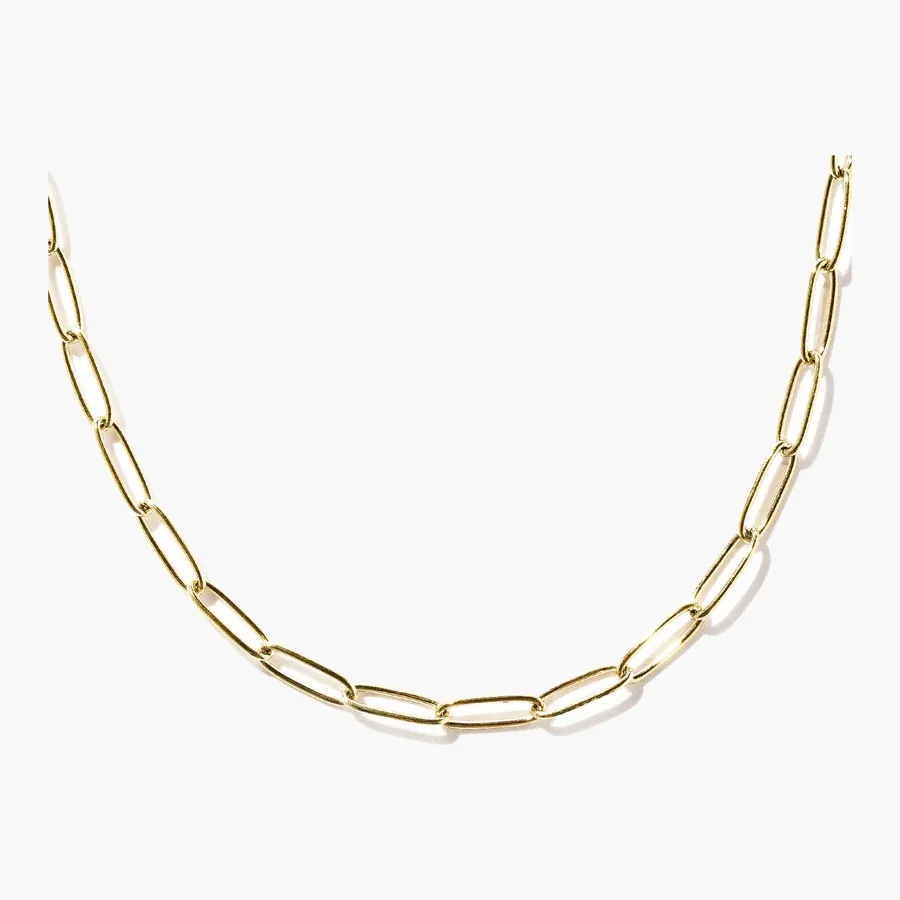
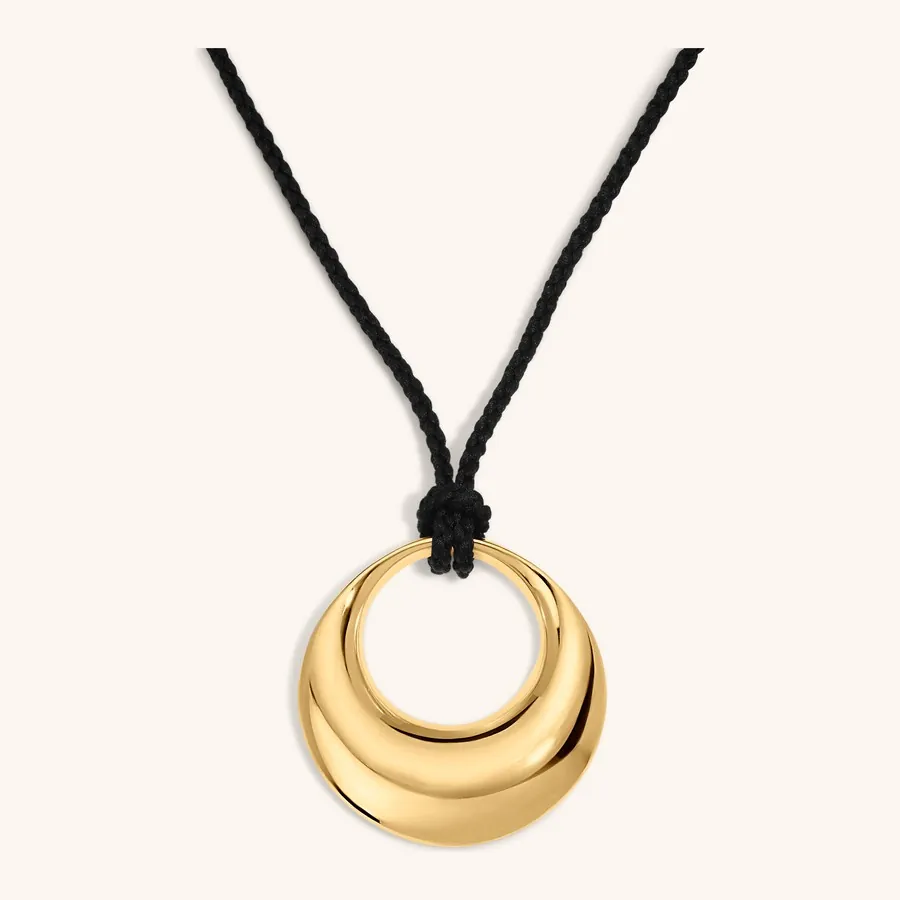
And then PVD is the one worth a closer look, because a coating put on in a vacuum can be made of very different things. For example, Pavoi's Waterproof line is 316L steel with 14K gold put on by PVD. Then the Ready-Made Refined Paperclip Chain, which is $18 at 16 inches, is 316L steel with a gold-colored ceramic coating put on in a vacuum, and 0% gold. And the Maison Miru Equilibrium Cord Pendant, Medium has a titanium nitride PVD finish, which is a coating with no gold in it. So if the gold content matters to you, ask what the coating is.
What stamps tell you, and what they don't
A stamp like 14K, 585 or 925 is the maker's promise about that part. Now the FTC says to look for a trademark next to it. Basically, that's the maker's name or mark, and federal law requires it whenever a gold or silver quality mark is stamped. And the FTC's advice is plain: if you don't see a trademark with the karat mark, don't buy it.
Now a stamp with letters after it is a different metal. "14K GF" is gold-filled. "14K GP" or "14K GEP" is plated. And "HGE" is heavy gold electroplate. So keep in mind, 14K on its own and 14K with letters after it are not the same thing at all.
Something else to note is that a stamp only speaks for the part it's on. So a 925 on the clasp doesn't tell you what the chain is. And stamps can be faked as well. GIA once examined a bracelet sold as solid 14K gold. It was a thin gold shell over wax or resin, and the 14K mark was on a separate piece glued on.
Solid or hollow: the Mejuri Rolo Chain Charm Necklace
Some gold chains are hollow inside, and that's done to save gold and money. But keep in mind that hollow links can dent, and Jewelers of America says hollow rope chains are especially hard to repair. And it's worth noting the FTC says a hollow gold piece should say so, and should never be called solid.
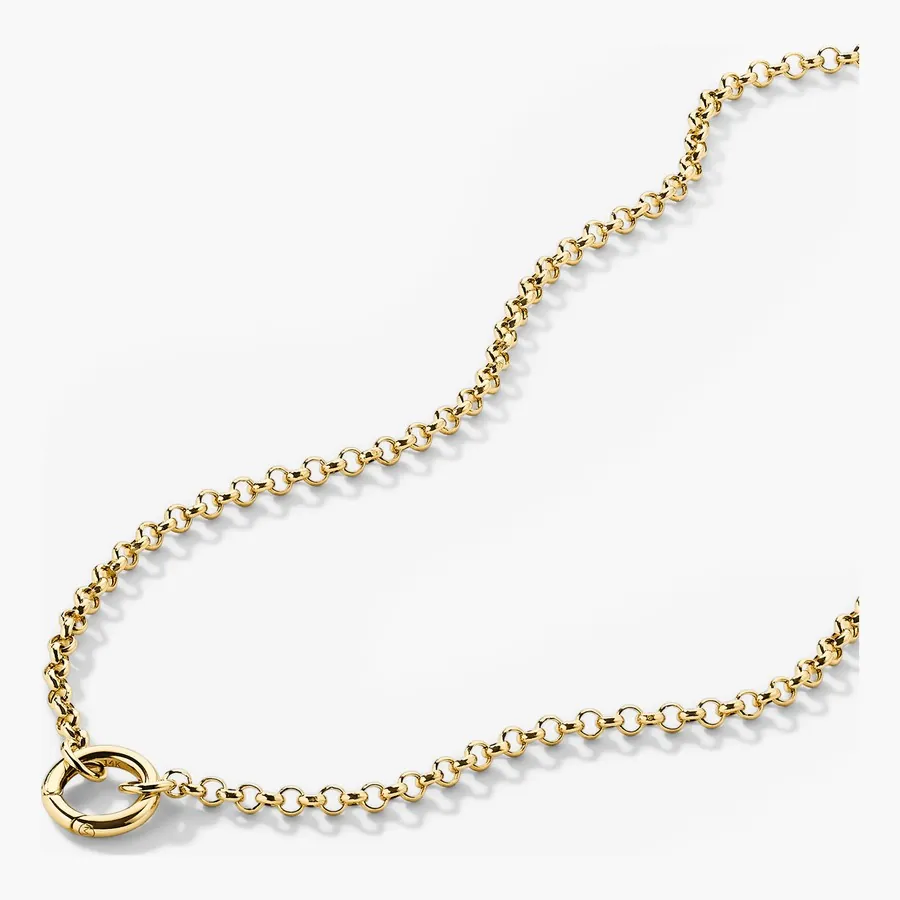
The Mejuri Rolo Chain Charm Necklace is a good example of why you want to read the details. It's $1,200 at 18 inches or $1,300 at 20 inches. Now the photo descriptions on Mejuri's page call it "14k solid gold." But the details list on the same page says "Hollowed 14k gold." So before you buy a gold chain, look for the word hollow in the details, and if it isn't clear, just ask.
And if you want solid chains that hold up to water and sleep, my gold necklaces you can shower in page covers those.
Chain width and link style
Width is the thickness of the chain in millimeters. Under 1mm, a solid gold chain is thread-thin. And one maker warns about it on its own page.
Photos from each maker's own store.
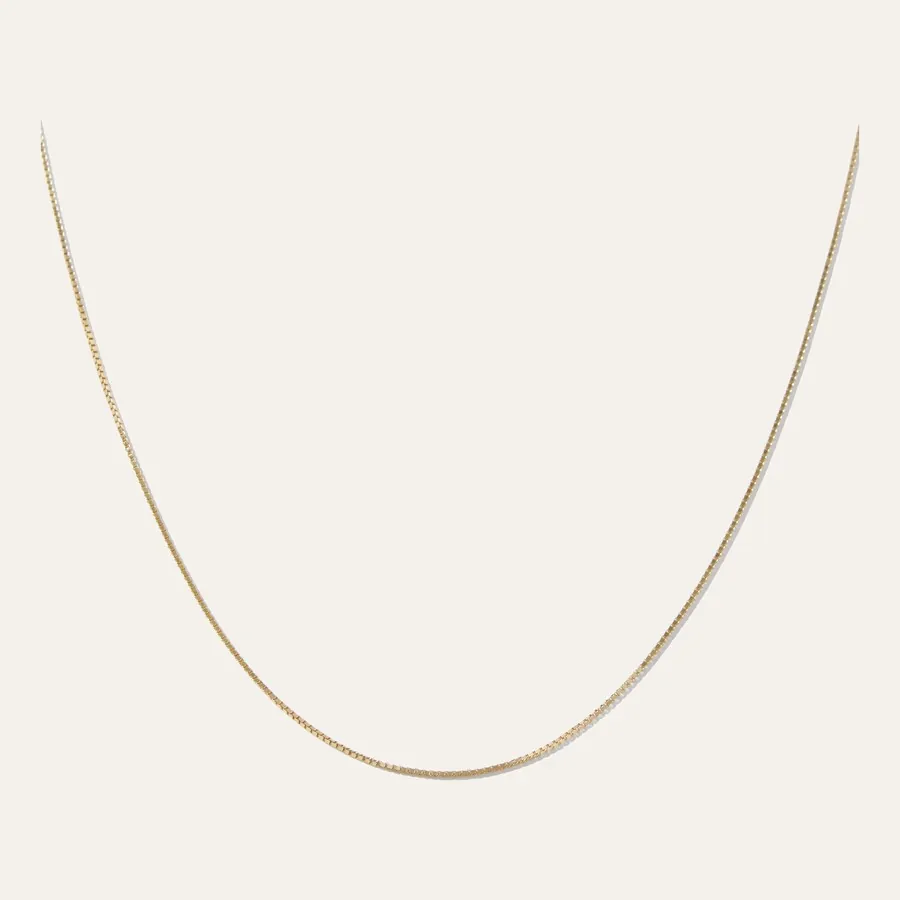
- The Quince 14K Gold Petite Box Chain Necklace is solid 14k for $258, but it's only 0.55mm. And Quince's own care note says not to hang charms or pendants on it, because the weight can bend the links.
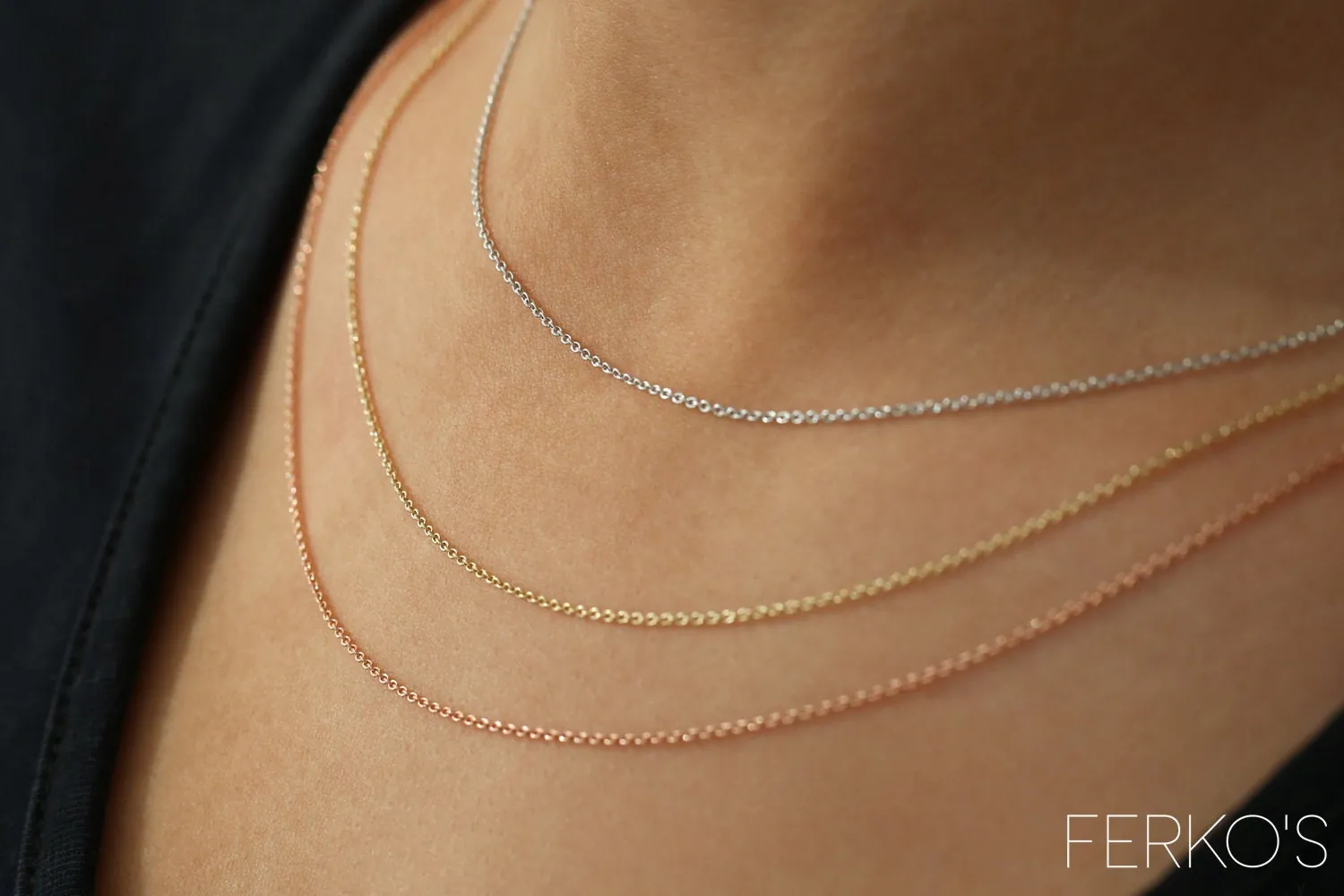
- The Ferkos Fine Jewelry 14k Solid Cable Chain is 0.85mm, and it runs $244 at 16 inches on Etsy. Just keep in mind, buyers say it's smaller and more fragile than they expected.
Now under $250, solid 14k chains from the well-known brands mostly cost more, or they're thinner than 1mm. So something to note here is that a thin chain at that price isn't a scam. It's just delicate, and best worn plain.
And then the shape of the links matters too. Here's what Jewelers of America says about the common styles.
- Curb: links twisted to lie flat. "Some of the most durable chains," and fairly simple to repair.
- Box: square links, and usually simple to repair. Thin box chains suit pendants.
- Figaro: basically a curb style with a long link every few links, and also simple to repair.
- Cable: plain oval or round links. Bench jewelers trust cable for pendants, but Jewelers of America says cable can be hard to repair.
- Herringbone: flat, sleek links that tend to twist and kink, and they're hard to repair.
- Snake: smooth, and usually thin and delicate.
- Rope: hard to repair, especially hollow rope.
So ultimately, bench jewelers and appraisers give the same advice for a chain worn every day. Pick cable, rolo, wheat, curb or box links. And skip hollow chains, herringbone and thin snake chains.
The clasp and the little rings
The clasp should match the chain. A lobster clasp is basically the kind shaped like a claw with a little lever, and Jewelers Mutual calls it especially well suited to heavy pieces. Then a spring clasp is the small round kind, and that one works better for fine, delicate chains. Jewelers Mutual puts it plainly: a dainty clasp on a heavy necklace is "a recipe for disaster."
Now the other thing to look at is the jump ring. Basically, a jump ring is the little ring that joins the clasp to the chain. And an open one with a gap is a common weak spot, because it can pull open and the clasp can slip right off. So look at it in the photos or in your hand. The ends should meet with no gap, and it should feel smooth.
And then something to keep in mind is that the chain and the clasp should be as good a metal as the pendant. The HMH Religious Sterling Silver Oval Miraculous Medal is a good example. It's a solid sterling medal for $66 at Acadian Religious, but it comes on a stainless steel curb chain. So the medal is sterling and the chain isn't.
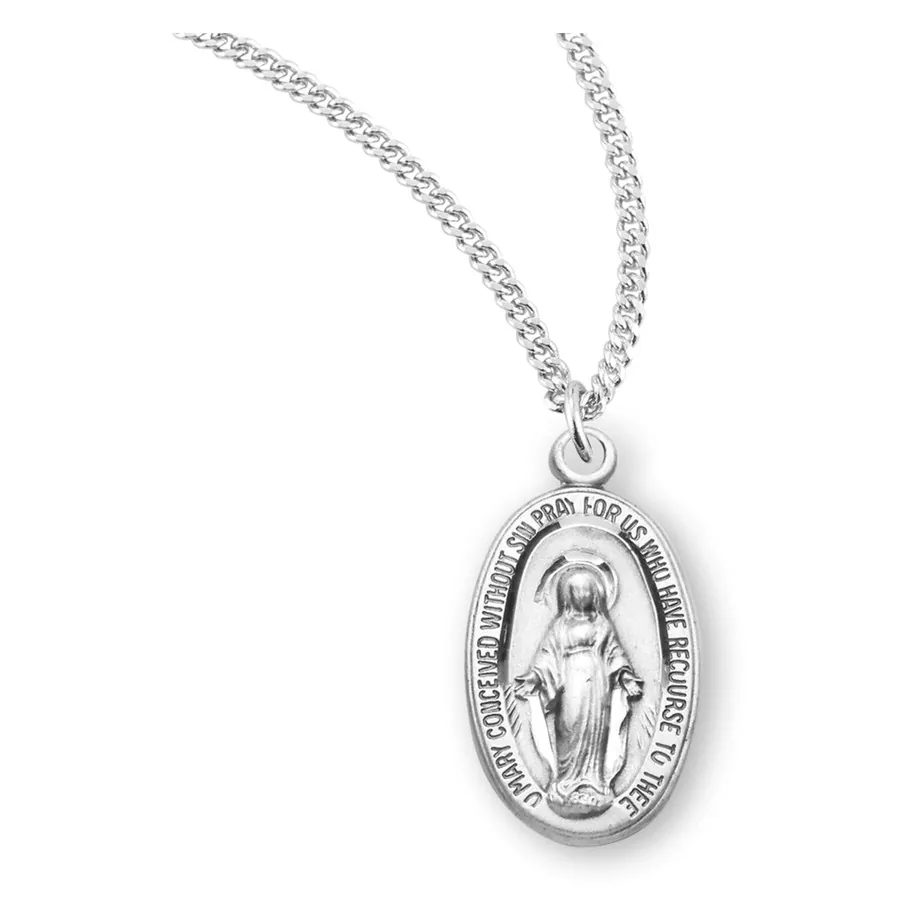
My cross and faith necklaces page pairs that medal with a sterling chain.
Plated brass, gold-filled and PVD steel, side by side
Many cheap "gold" necklaces are brass with a thin layer of gold plating. And once the plating wears through, the brass touches the skin. Brass has copper in it, and copper could leave a green mark.
Photos from each maker's own store.
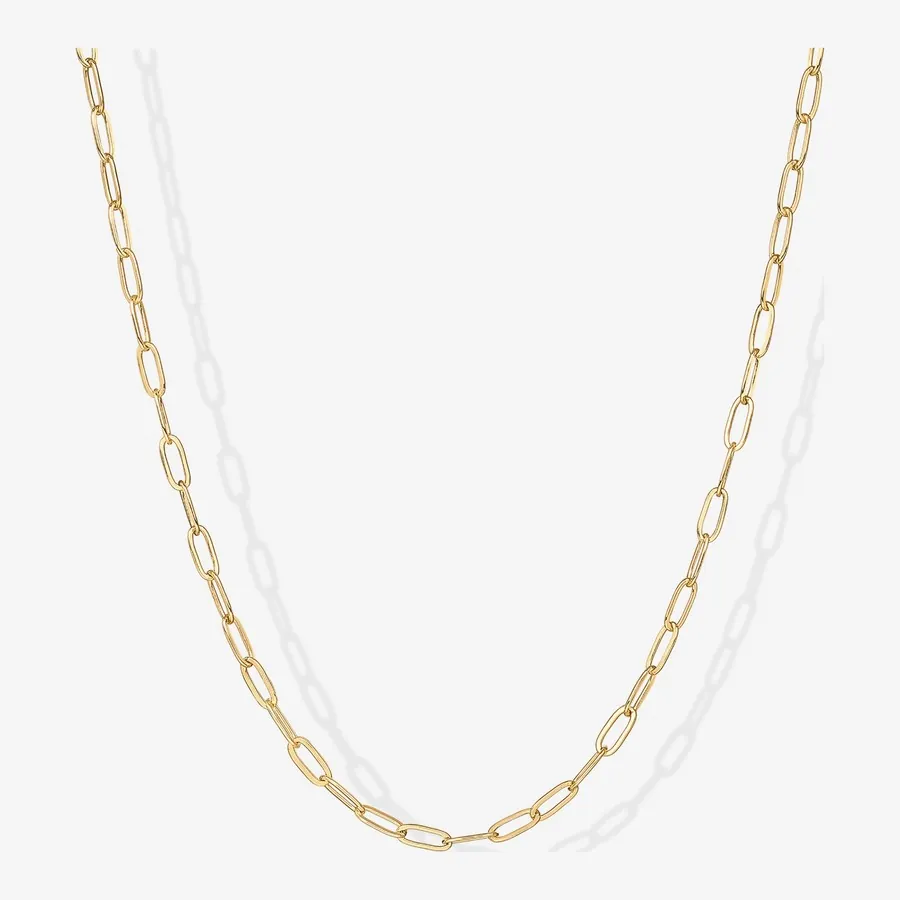
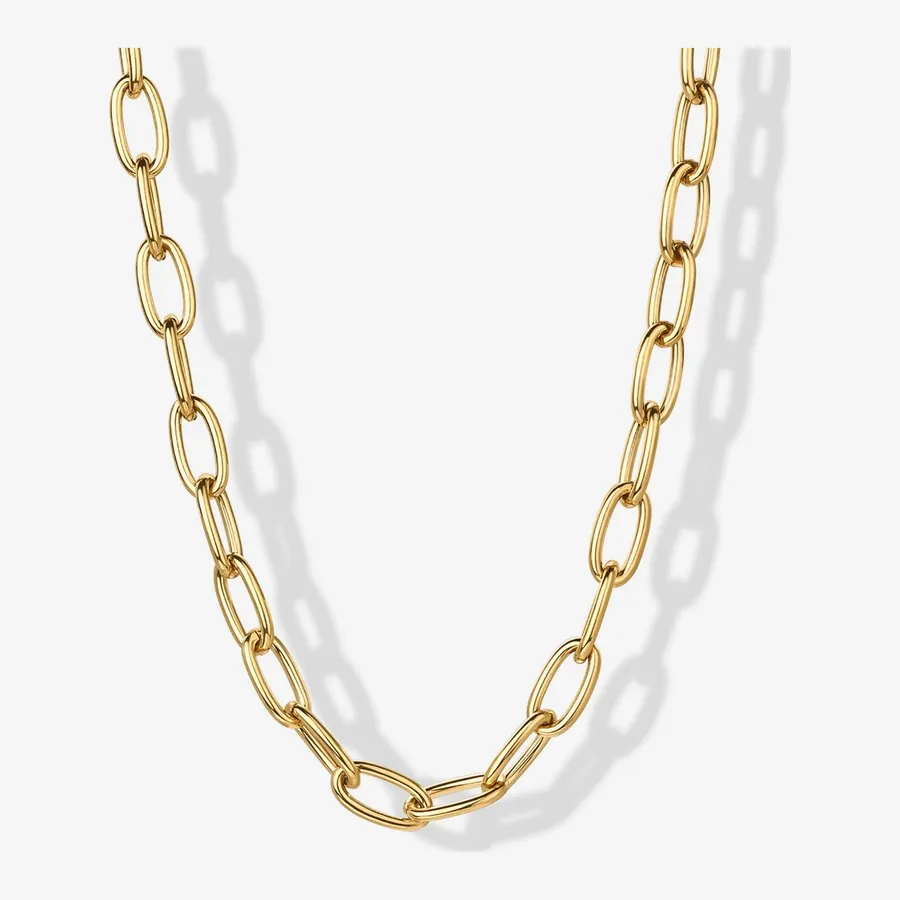
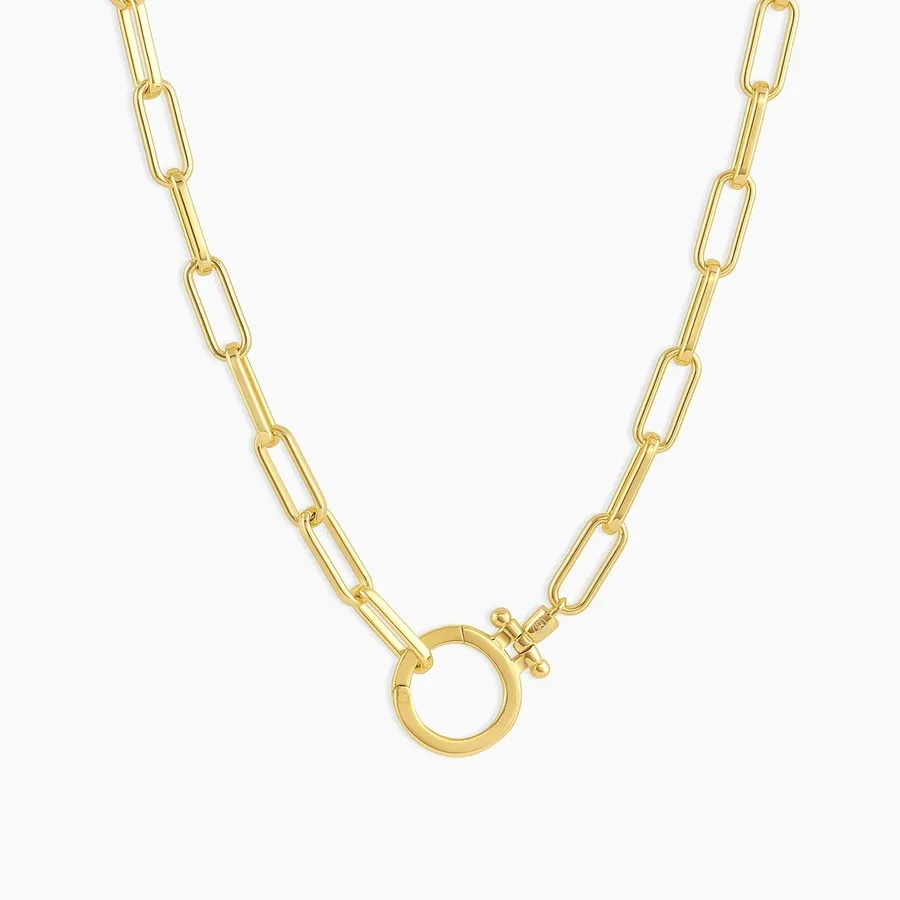
Now Pavoi is the clearest example here, because Pavoi sells both kinds and they look almost the same. The Pavoi Paperclip Chain Necklace is $13.95, and it's one of Pavoi's regular plated pieces, which are brass or sterling silver under the gold. And Pavoi says to keep those away from water, sweat and lotion. The Pavoi Waterproof Paperclip Chain Necklace is $17.45, and it's 316L steel with a 14K gold PVD coating. So for $3.50 more, you're getting steel underneath instead of brass.
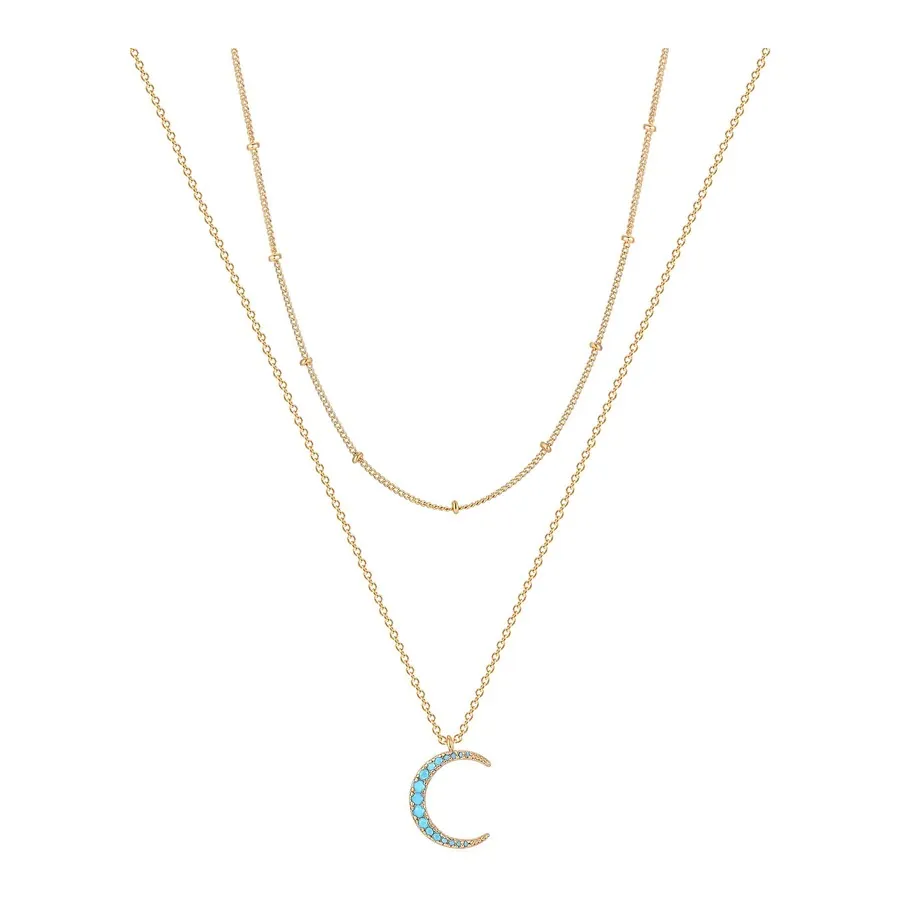
Then there's the Mevecco 18K Gold Plated Dainty Carved Moon Layered Pendant Necklace, which is $13.49 at Walmart. Something to note is that the title says 18K, but Mevecco's own text says 14K gold plated over brass. And owners report Mevecco necklaces tarnishing and turning their neck green within about five months. One said a chain broke the first time she wore it.
Photos from each maker's own store.
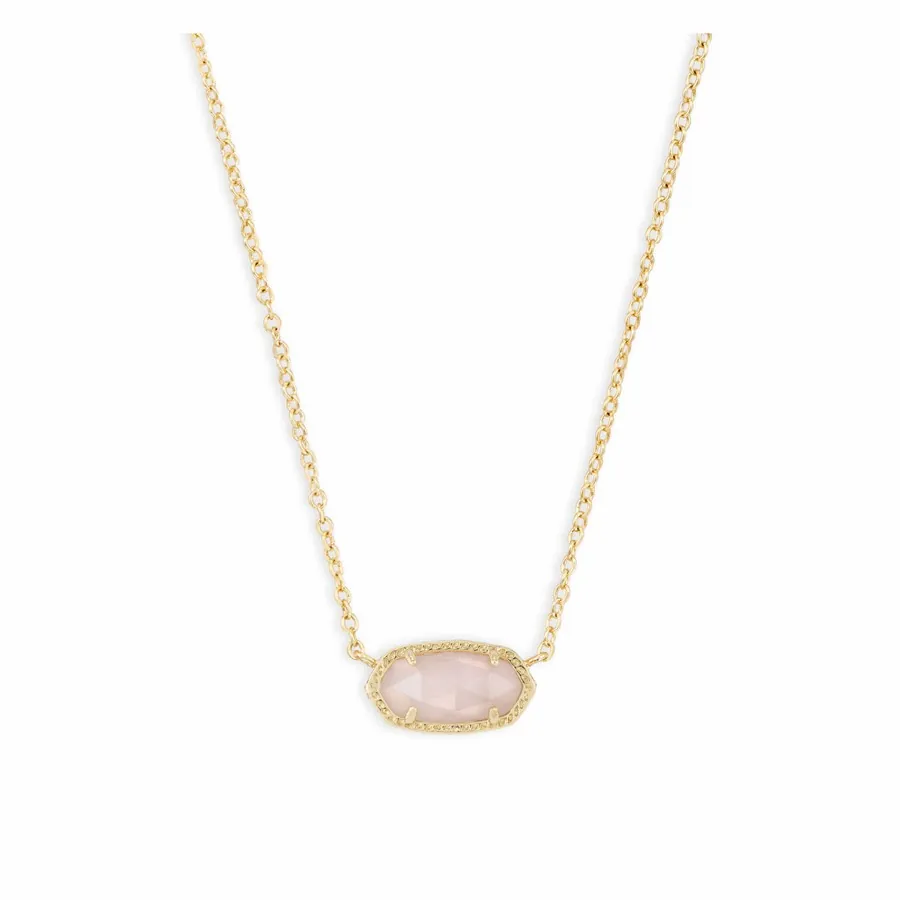
Now keep in mind, plating isn't only a cheap-brand thing. The Kendra Scott Elisa Pendant Necklace in Gold is $60, and it's 14k gold over brass. And the Gorjana Parker Necklace is $82 at 18 inches, and it's 18K gold plated brass. Both makers say to keep them away from water. So these are fine trend pieces, just not ones to wear in the shower.
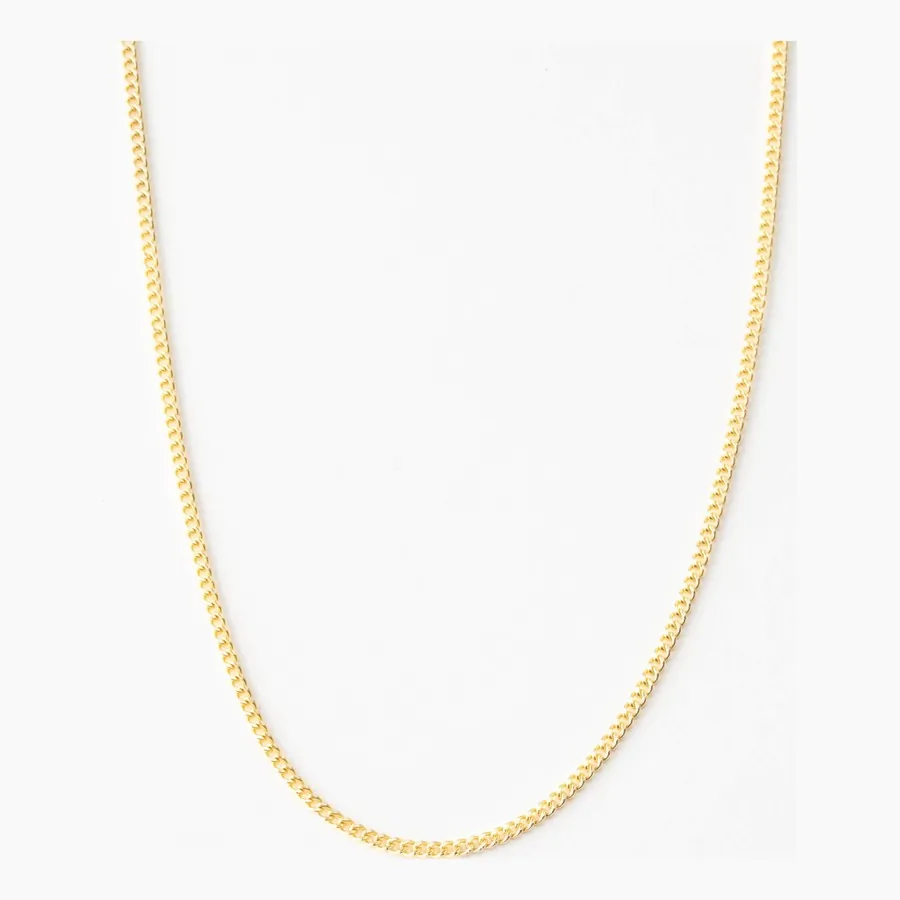
And then gold-filled sits in between. The GLDN Theo Chain is $98 in 14k gold-filled. It's a 1.5mm curb chain with a lobster clasp. Basically, the gold layer is much thicker than plating, but there's still brass underneath. And something to keep in mind is that owner reviews on other GLDN gold-filled pieces include a chain that broke while running after about six weeks, and a necklace that turned mostly black within four months. GLDN says tarnish can depend on body chemistry.
My cheap necklaces under $30 page has the steel chains that hold up at that price. And my first necklace for teens and tweens page covers the Kendra Scott Elisa and the Gorjana Parker in more detail.
"Titanium" necklaces that are mostly steel
A necklace sold as "titanium" can still be mostly steel, so you can't trust the word alone. Basically, real titanium has no nickel in it, which is why the word sells so well to anyone with a nickel allergy. But some necklaces sold as titanium are only partly titanium, or only coated with it.
Photos from each maker's own store.
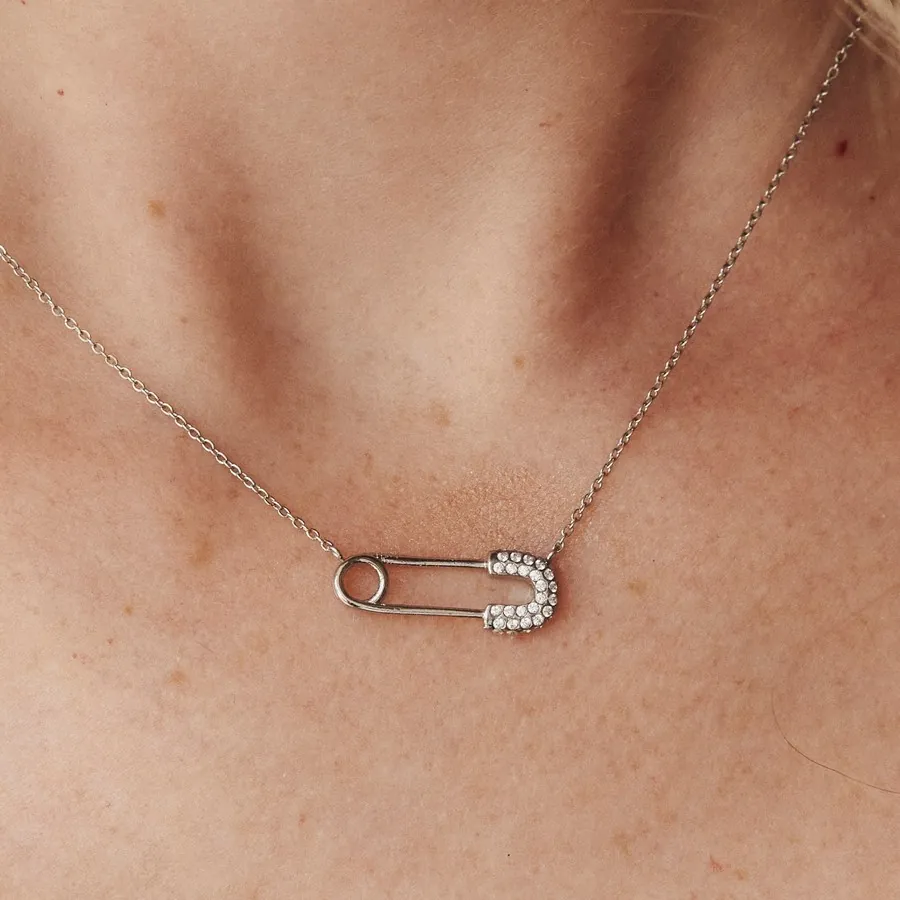
- Tini Lux Alexia Necklace, $95. So the product page lists the base metal as stainless steel, plated with titanium nitride. But that same page and its collection pages call it "Pure Titanium."
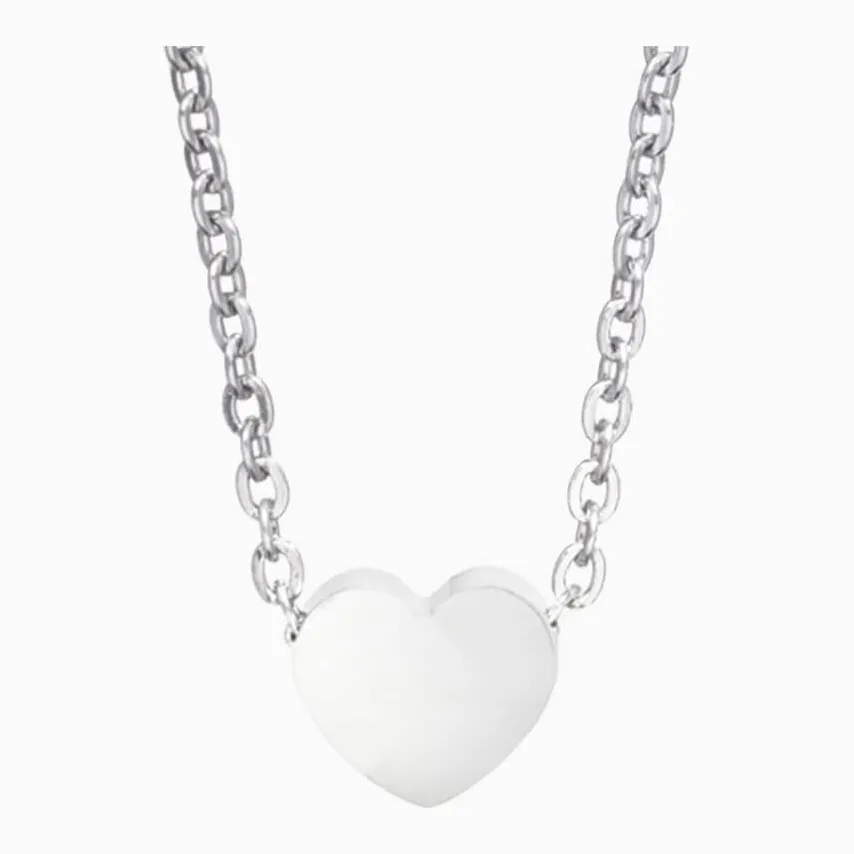
- Blomdahl Heart Necklace, $75. Now the heart itself is titanium. But Blomdahl's chains are 316L steel under a ceramic coating.
- Maison Miru Equilibrium Cord Pendant, Medium, $150. Maison Miru's necklaces are coated stainless steel or sterling silver. Its titanium only shows up in its earrings.
So when a listing says titanium, look for ASTM F136 or F67. And then check what the chain and the clasp are, not just the pendant. My necklaces for sensitive skin page covers what's safest for a nickel allergy.
Listing red flags
A good listing names the metal of the chain, says solid or hollow, gives the width and the clasp, and states the return rule. Here are the signs a listing is hiding something.
- The listing contradicts itself. The YourNamesJewelry 14k solid gold initial necklace says sterling silver in one place. It also promises refunds, while Etsy's return box for the same listing says returns aren't accepted.
- The karat changes, or it's lower than you think. That same YourNamesJewelry listing is $180 in 14k, but the $150 version is 8k gold. And keep in mind, 8k is only one third gold. Mevecco does something similar, where the title says 18K while its own text says 14K plated.
- "Solid" in one spot and "hollow" in another, like the Mejuri Rolo Chain Charm Necklace.
- The title says gold and "plated" is buried lower down. The FTC's guides say a plated piece should say it's plated.
- No width, no clasp, no metal for the chain. If the pendant is named and the chain isn't, ask.
- Fuzzy words with no metal: "gold tone," "gold layered," "gold bonded," "gold dipped," "waterproof," "hypoallergenic." The FTC's guides don't define them. The FTC says to ask the seller what they mean, and to get the return policy in writing.
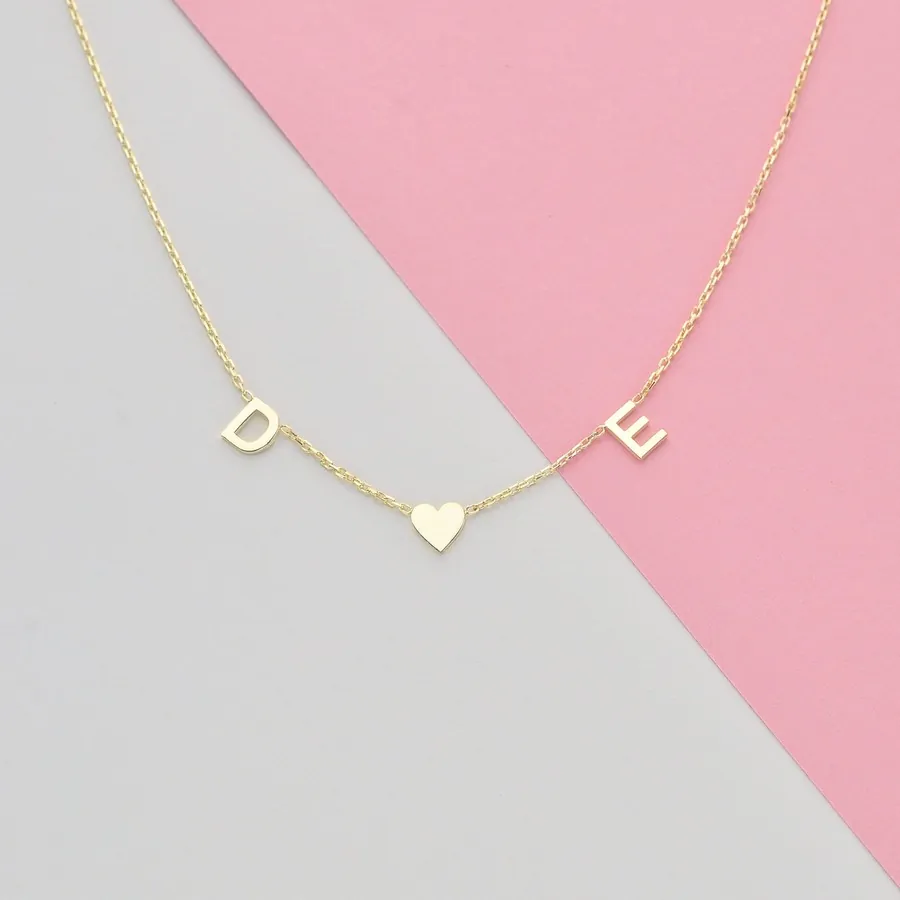
Now if you want initial necklaces whose listings hold up, my initial and name necklaces page has those for you.
Simple checks you can do, and their limits
None of these checks tells you everything on its own. But run them together and they'll catch most junk.
- Read the stamp. Use your phone's camera zoom here. You're looking for the karat or 925, the maker's mark next to it, and any letters after it like GF, GP or HGE. Just keep in mind that a stamp is a promise, not proof, and it only covers the part it's stamped on.
- Look at the clasp and jump rings. The gate should snap shut on its own. And the jump ring's ends should meet with no gap between them.
- Look for a different color showing through. Check the edges, the clasp and anywhere the pendant rubs, because worn plating shows the metal underneath. The limit here is that a new plated chain looks perfect.
- Test for nickel. The Nickel Alert spot test is $24.99 at NoNickel. Basically, you rub a wet swab on the metal. It turns pink, red or purple if nickel comes off. Just keep in mind this only tests the surface, so a coating can hide nickel underneath until it wears through.
- Try a magnet, but don't trust it much. Gold isn't magnetic. But a gold refiner points out that some gold alloys can be, and calls relying on the magnet test "a fallacy." So treat it as a hint at most.
- Ask the seller. Ask what the chain is made of, whether it's solid or hollow, and what the return policy is. And you'd want to get those answers in writing.
A chain that passes: GLDN Solid Gold Fine Cable Chain
The GLDN Solid Gold Fine Cable Chain is a good example of what an honest listing looks like. It runs $228 at GLDN in 10k solid gold, or $328 in 14k. It names the karat, it says solid gold, and it gives you the width, 1.0mm, along with the link style, round cable.
It also comes with a 2 inch extender, and it has 4.8 stars from 352 reviews on GLDN's site. Something worth noting is that GLDN offers free repairs, even on custom orders.
Flaws but not dealbreakers
The GLDN Solid Gold Fine Cable Chain closes with a spring clasp, and something to note is that GLDN doesn't list the clasp metal separately from the chain.
Also, at 1.0mm it's still delicate, and a hard snag could break it.
And keep in mind that 10k is 41.7% gold, so the color is a little paler than 14k.
A sterling chain for a good pendant: James Avery Fine Cable Chain
The James Avery Fine Cable Chain is $55 at James Avery in sterling silver at 18 inches. It's about 1.3mm thick and uses a lobster clasp. And it also comes in 16 and 20 inches. Something to note is that James Avery says it pairs best with charms and pendants under 1 inch.
Now this is the chain I'd use when a solid sterling pendant came on a cheaper chain, like the HMH medal. Just keep in mind it's rated 3.8 out of 5 from 244 reviews. But fortunately, James Avery does repair the clasp for free.
Check for nickel at home: Nickel Alert
The Nickel Alert spot test is $24.99 at NoNickel. You put a few drops on a cotton swab. Then you rub it on the metal for 15 to 30 seconds. If the swab turns pink, red or purple, there's nickel in that metal.
Now NoNickel says it finds nickel down to 10 parts per million, and one bottle is good for more than 200 positive tests. And something to keep in mind is that you'll want to test the clasp and the jump rings, not just the chain.
Why a cheap necklace itches or turns skin green
A green mark with no itch usually comes down to copper. Basically, the copper in brass reacts with sweat, water or lotion, and that reaction leaves a green stain on your skin. Now the stain itself isn't harmful, and it washes off with soap and water. But on a plated necklace, it does tell you something useful. It usually means the plating has worn through.
Itchy, red skin where the necklace or clasp sits may point to a nickel allergy. The American Academy of Dermatology estimates more than 18% of people in North America are allergic to nickel. Something worth noting here is that Europe actually limits how much nickel a necklace can give off, and a coating has to keep it under that limit for at least two years of normal use. The US has no mandatory federal rule like that for jewelry.
Now if the rash blisters, keeps coming back or looks infected, see a dermatologist.
More necklaces that pass these checks
Every pick on these pages names the metal of the chain. And that means if you'd rather not run through all these checks yourself, you can just browse these pages instead.
- Gold necklaces you can shower in
- Necklaces for sensitive skin
- Cheap necklaces under $30
- Initial and name necklaces
- First necklace for teens and tweens
- Cross and faith necklaces
- A necklace gift for a daughter
- How to tell good earrings from junk
My take
Read what the chain is made of all the way through. Make sure it says solid and gives a width of about 1mm or more. And look for a lobster clasp on closed rings. The GLDN Solid Gold Fine Cable Chain at $228 is what an honest listing looks like. And under $20, steel like the Pavoi Waterproof Paperclip Chain Necklace at $17.45 is the kind that lasts.
Have a question about “How to tell a good necklace from junk”?
Ask it here. Every question comes to me first. I answer as many as I can, and each answered question goes on this page with my answer so other readers can see it too. I don't ask for your email, so check back on this page for the answer.
More jewelry guides
The best Christmas earrings: nativity, Star of Bethlehem and cross designs
Faith earrings for Christmas that she can wear to church and keep for years, with picks for sensitive ears and a nativity pair under $10.

The best food earrings
Hand-sculpted donuts, cheesecake slices and cupcakes from small makers, most of them $12 to $45 a pair, with what goes through her ear.
The best holiday earrings for teens and young women
Gingerbread houses, trees, reindeer and snowflakes that are fun to wear and good enough to keep, with picks for sensitive ears and for stocking stuffers.
The best mushroom earrings
Spotted toadstools, metal mushroom clusters and copper mushrooms, mostly $10 to $40 a pair, with what goes through her ear.
The best ring sizer, and how to find your real ring size at home
A solid metal ring sizer as wide as the ring you'll wear gives a truer size than a thin or flexible one. Here's what to buy and how to measure.
The best birthstone necklaces, birth flower necklaces and mom necklaces
Most birthstone necklaces under $200 are cubic zirconia or glass. Here are the ones with real stones, and what the rest really use.
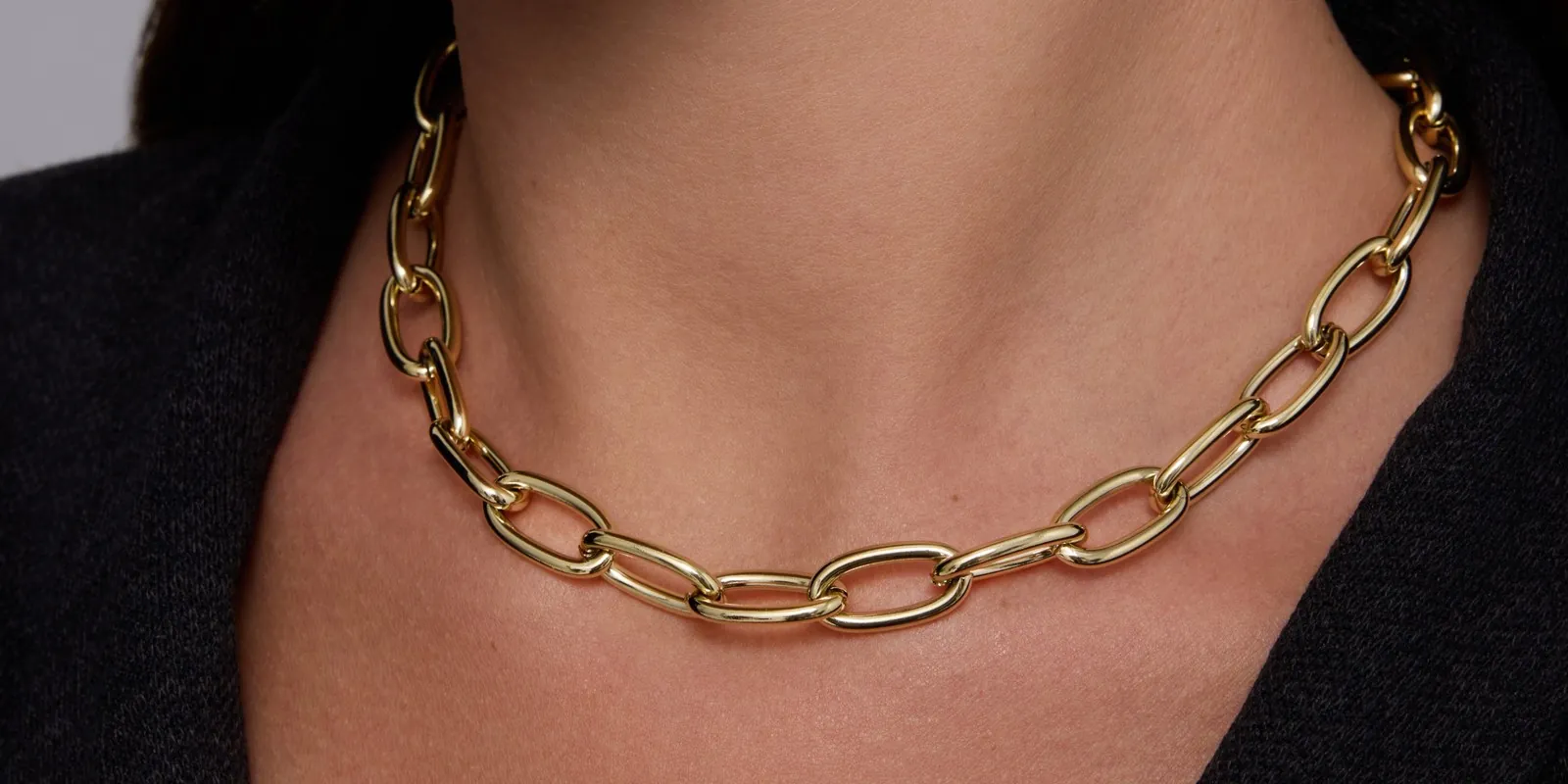
The best cheap necklaces under $30 that hold up
Most cheap gold necklaces are plated brass that wears off and turns necks green. These stainless steel ones last.
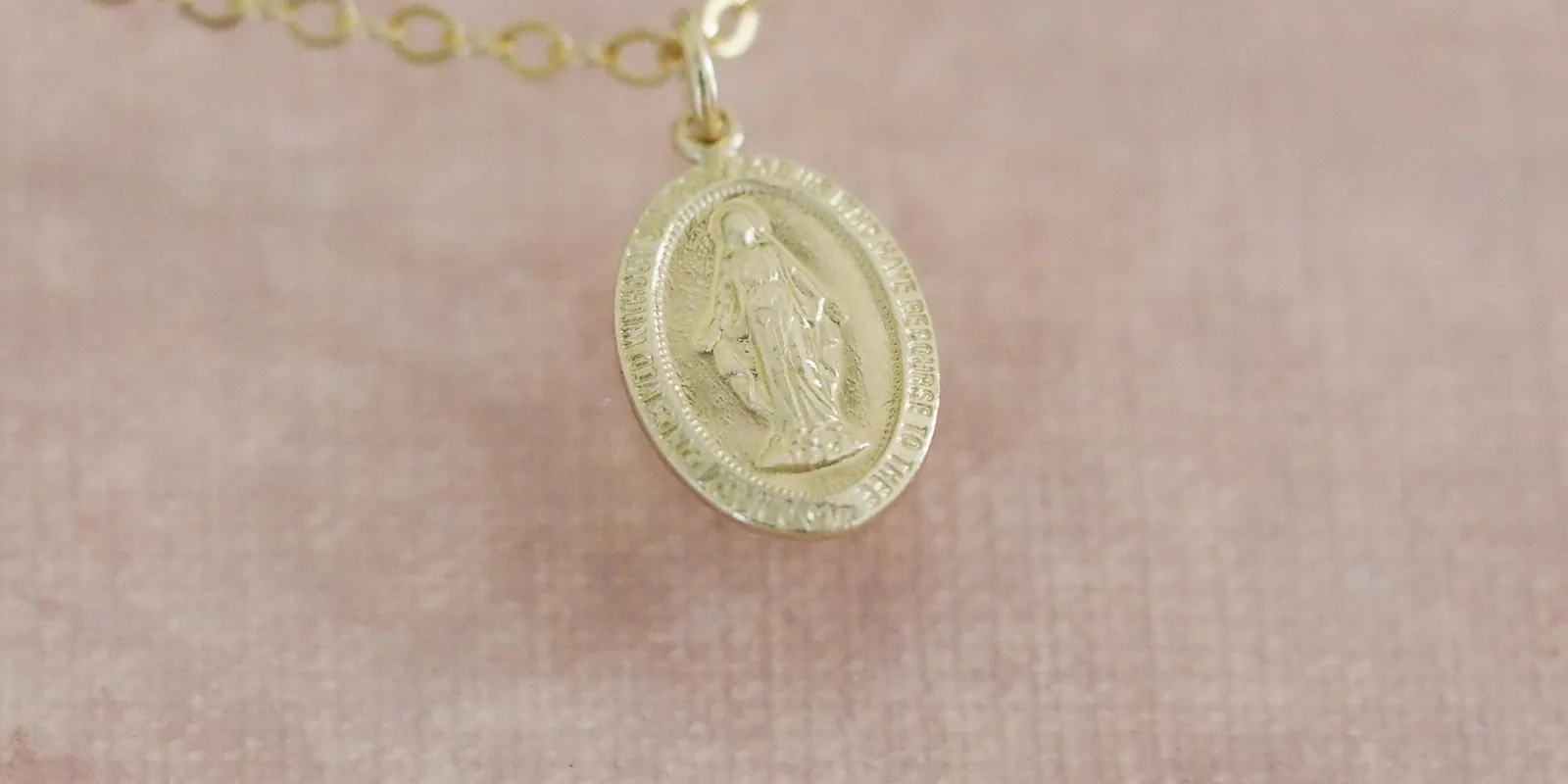
The best cross and faith necklaces for girls and women
Crosses and Miraculous Medals in real metal, on chains that match, and which ones arrive in time for a baptism or confirmation.
The best earrings for sensitive ears under $100
Titanium, niobium and solid yellow gold pairs from $41 to $98, with what each post and back is made of and why the metal matters more than the label.
The best earrings for sensitive ears under $30
Gummy bears, rainbows, book stacks and moons on posts her ears can handle, with what each post is made of and which metals to look for.
The best earrings you can sleep in
Flat-back studs and small hoops that don't poke her neck or come loose overnight, in titanium or solid gold, with what each pair really costs.
The best first earrings for kids and newly pierced ears
Where to get ears pierced, which studs to heal in, how to keep them clean, and the first fun pairs once they've healed.
The best first necklace for a teen or tween girl
The two necklaces teens ask for most are gold-plated brass. Here's a real one she'll wear for years, for under $100.
Fun earrings that aren't junk
Food, animals, mushrooms, moons, bows and quirky objects, $10 to $40 a pair, from shops that say what goes through her ear.
The best gold necklaces you can shower in
Everyday gold chains she never has to take off, and what the metal and the links mean for showers, sleep, sweat and swimming.
The best handmade earring shops
The small shops earring fans keep naming, with one or two real pairs from each, mostly $18 to $30.
How to tell good cheap earrings from junk
Check the part that goes through the ear. What each metal word on a label means, which labels to trust, and how to put a cheap charm on a titanium hook.
The best initial and name necklaces
Initial necklaces worth buying for about $20 to $150, with what each letter, chain and clasp is made of and what happens if the letter comes out wrong.
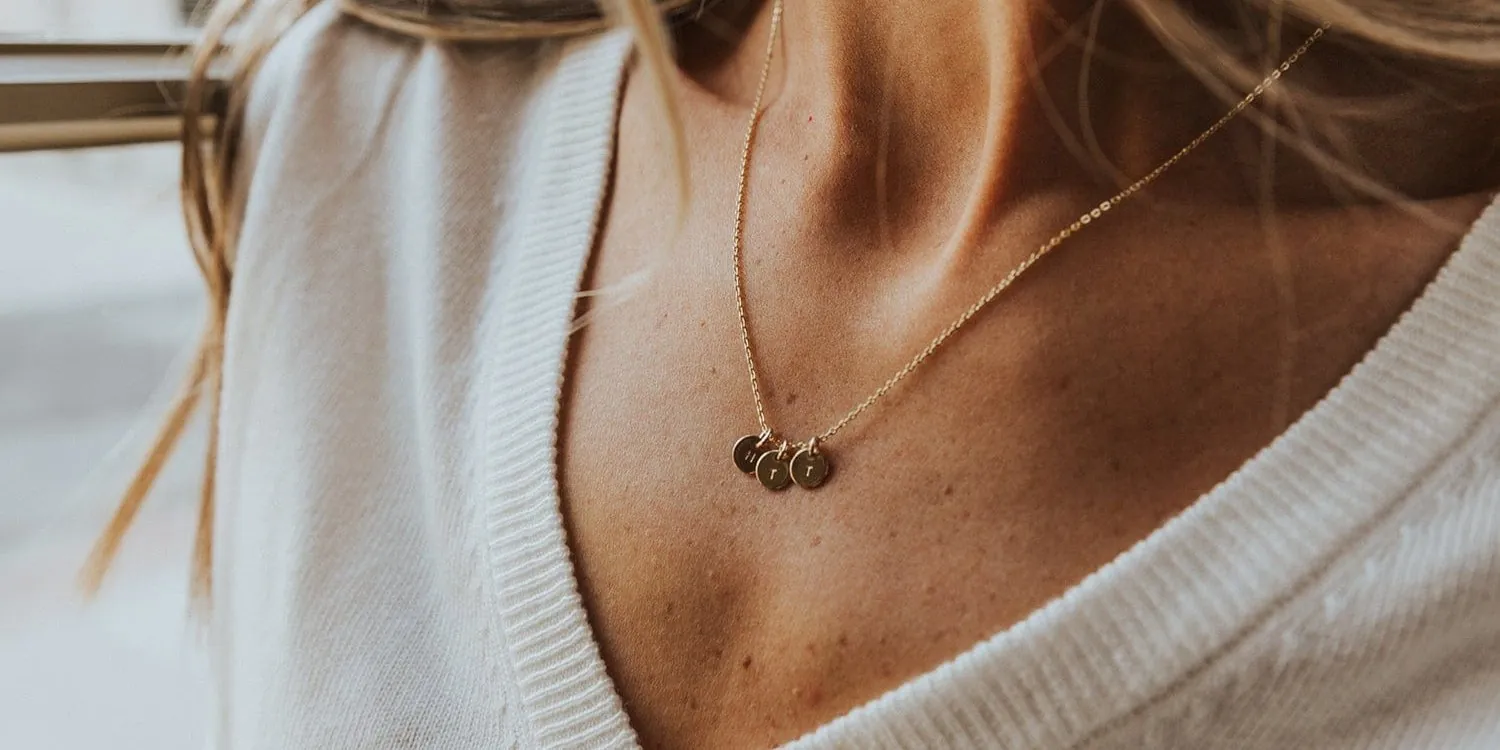
The best necklaces for young women
Simple, lasting necklaces under about $100, whether you're buying for a daughter, a girlfriend or yourself. The metal matters more than the brand, so I picked by what each necklace is made of.
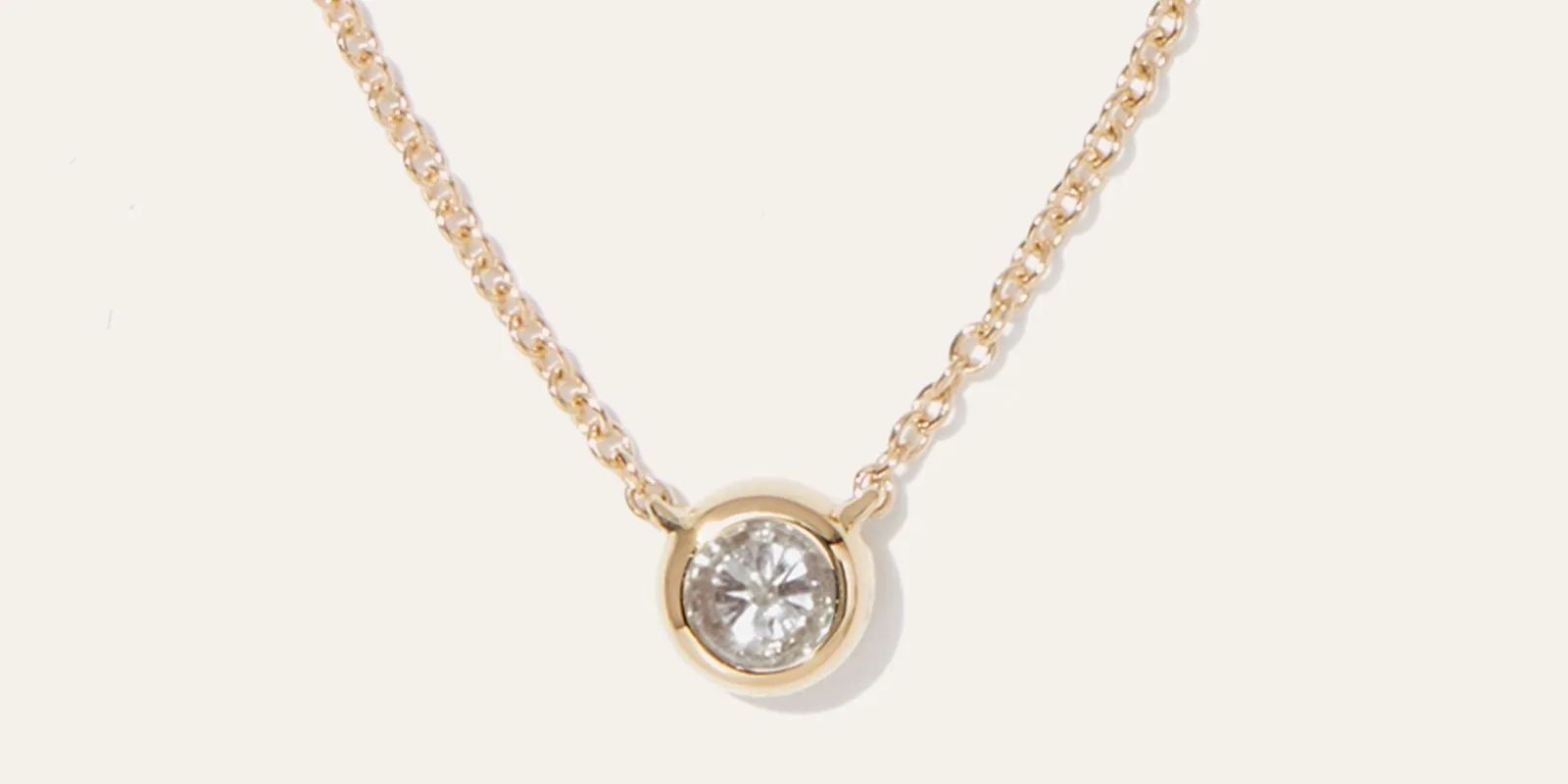
The best gold necklace gift for her under $300
Solid gold with a real diamond is hard to find under $300. Here's what each price actually buys, and which stones are really gems.
The best necklaces for sensitive skin and nickel allergies
Most "hypoallergenic" and "titanium" necklaces are coated steel. Here's what's actually safe to wear when nickel makes your neck itch.
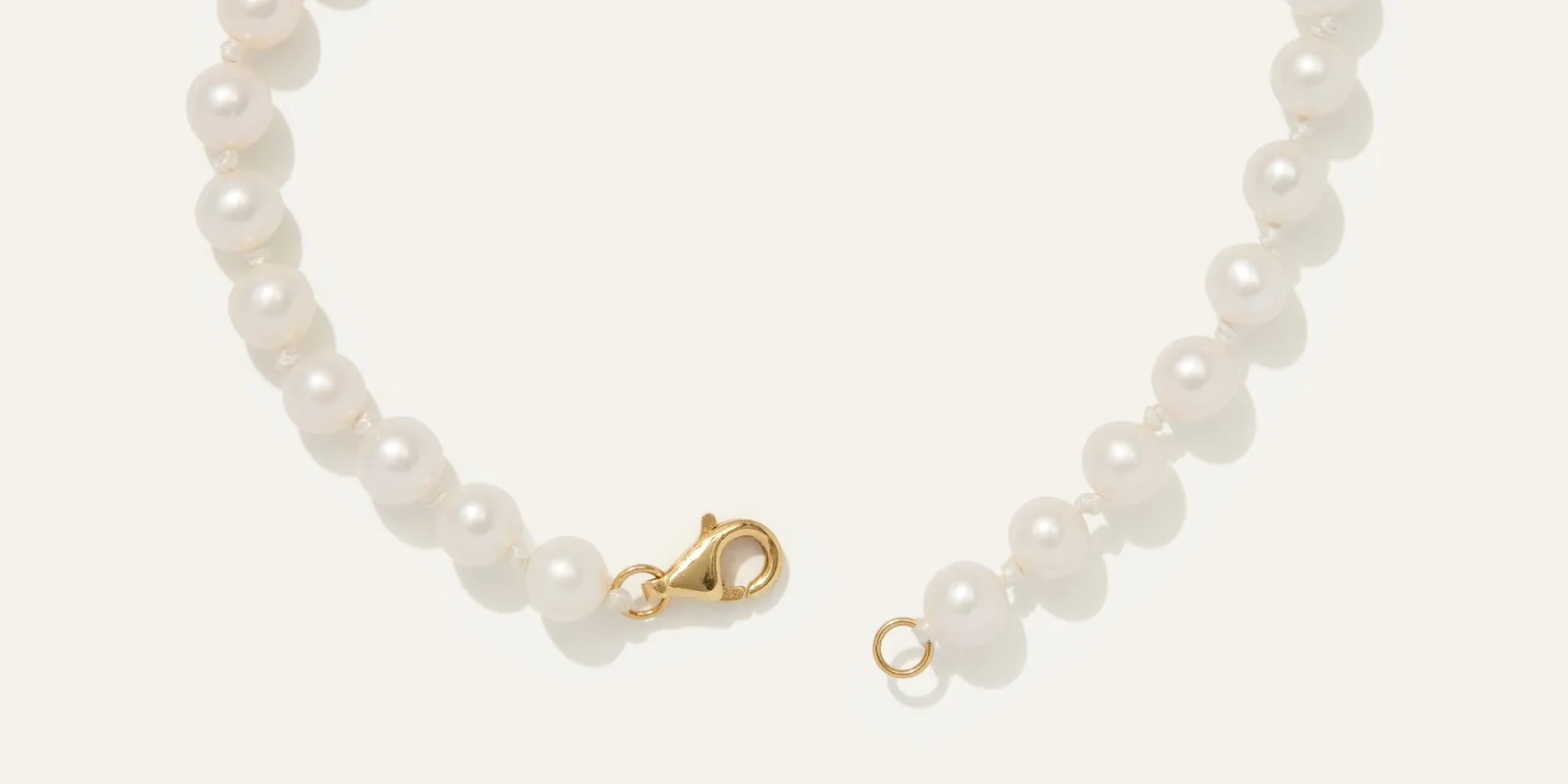
The best real pearl necklaces and pendants under $250
Real pearls, not shell or glass. Here's what you get for $250 or less, what the clasp and chain are really made of, and how long you have to send it back.
The best earrings to give your daughter in her 20s
Simple pairs under $100 she'll wear every day, sorted by the kind of earring wearer she is: one she never takes off, real gold, touchy ears, a stack of piercings, or a small stocking stuffer.
- Federal Trade Commission, Guides for the Jewelry, Precious Metals, and Pewter Industries, 16 CFR 23.3 (gold): www.law.cornell.edu/cfr/text/16/23.3.
- Federal Trade Commission, 16 CFR 23.4 (vermeil): www.law.cornell.edu/cfr/text/16/23.4.
- Federal Trade Commission, 16 CFR 23.5 (silver): www.law.cornell.edu/cfr/text/16/23.5.
- 15 U.S. Code 297, Stamping plated articles and the identifying trademark rule: www.law.cornell.edu/uscode/text/15/297.
- Federal Trade Commission, Buying Platinum, Gold, and Silver Jewelry: consumer.ftc.gov/articles/buying-platinum-gold-and-silver-jewelry.
- U.S. Consumer Product Safety Commission, Jewelry FAQ: www.cpsc.gov/FAQ/Jewelry.
- Wikipedia, Fineness (585, 417 and 750 marks): en.wikipedia.org/wiki/Fineness.
- AZoM, Stainless Steel Grade 316L: www.azom.com/article.aspx?ArticleID=2382.
- Association of Professional Piercers, Jewelry for Initial Piercings (ASTM F136 and F67 titanium): safepiercing.org/jewelry-for-initial-piercings.
- Jewelers of America, Chains: www.jewelers.org/buying-jewelry/jewelry-styles/chains.
- Jewelers Mutual, Types of jewelry clasps: www.jewelersmutual.com/resources/individuals/necklace/types-of-jewelry.
- GIA, Gems & Gemology Spring 2024 Lab Notes: Electroformed gold bracelet: www.gia.edu/gems-gemology/spring-2024-lab-notes-electroformed-gold-bra.
- Garfield Refining, Is gold magnetic?: www.garfieldrefining.com/resources/blog/is-gold-magnetic.
- Nebraska Medicine, Why does some jewelry turn my skin green?: www.nebraskamed.com/health/questions-and-answers/you-asked-we-answered.
- American Academy of Dermatology, Nickel allergy: www.aad.org/public/diseases/eczema/insider/nickel-allergy.
- Danish Environmental Protection Agency, Fact sheet: nickel (EU REACH limits): eng.mst.dk/chemicals/chemicals-in-products/chemical-legislation/fact-s.
- Pavoi, Materials guide: www.pavoi.com/pages/pavoi-jewelry-descriptions.
- Mejuri, Rolo Chain Charm Necklace: mejuri.com/products/rolo-chain-charm-necklace.
- GLDN, Solid Gold Fine Cable Chain: gldn.com/products/solid-gold-dainty-chain.
- GLDN, Theo Chain: gldn.com/products/theo-chain.
- Quince, 14K Gold Petite Box Chain Necklace: www.quince.com/women/14k-gold-petite-box-chain-necklace?color=yellow-g.
- Ferkos Fine Jewelry on Etsy, 14k Solid Cable Chain 0.85mm: www.etsy.com/listing/926245386.
- Pavoi, Paperclip Chain Necklace: www.pavoi.com/products/paperclip-chain-necklace.
- Pavoi, Waterproof Paperclip Chain Necklace: www.pavoi.com/products/waterproof-paperclip-chain-necklace.
- Ready-Made, Refined Paperclip Chain: www.ready-made.co/products/refined-paperclip-chain.
- Mevecco 18K Gold Plated Dainty Carved Moon Layered Pendant Necklace at Walmart: www.walmart.com/ip/MEVECCO-18K-Gold-Plated-Dainty-Carved-Moon-Layered-.
- Kendra Scott, Elisa Pendant Necklace in Gold: www.kendrascott.com/jewelry/categories/necklaces/elisa-gld.html.
- Kendra Scott, Jewelry Care and Repair: www.kendrascott.com/jewelry-care-repair.html.
- Gorjana, Parker Necklace: www.gorjana.com/products/parker-necklace.
- Gorjana, Care Guide: www.gorjana.com/pages/care-guide.
- Tini Lux, Alexia Necklace: tinilux.com/products/alexia-necklace.
- Blomdahl, Heart Necklace: blomdahlusa.com/products/heart-necklace.
- Blomdahl, Plain Necklace: blomdahlusa.com/products/plain-necklace.
- Maison Miru, Equilibrium Cord Pendant, Medium: www.maisonmiru.com/products/equilibrium-cord-pendant-medium.
- YourNamesJewelry on Etsy, 14k solid gold initial necklace: www.etsy.com/listing/737019132.
- Acadian Religious, HMH Sterling Silver Oval Miraculous Medal: acadianreligious.com/products/sterling-silver-oval-miraculous-medal-s2.
- James Avery, Fine Cable Chain: www.jamesavery.com/necklaces-chains/fine-cable-chain/CH-5.html.
- NoNickel, Nickel Alert: www.nonickel.com/products/nickel-alert-nickel-test-kit.
Lancelot's List is an independent site. No company paid to be on this page. This guide gives general information.